Real-World AI: Start With the Work Your Team Keeps Repeating
· LumeVest
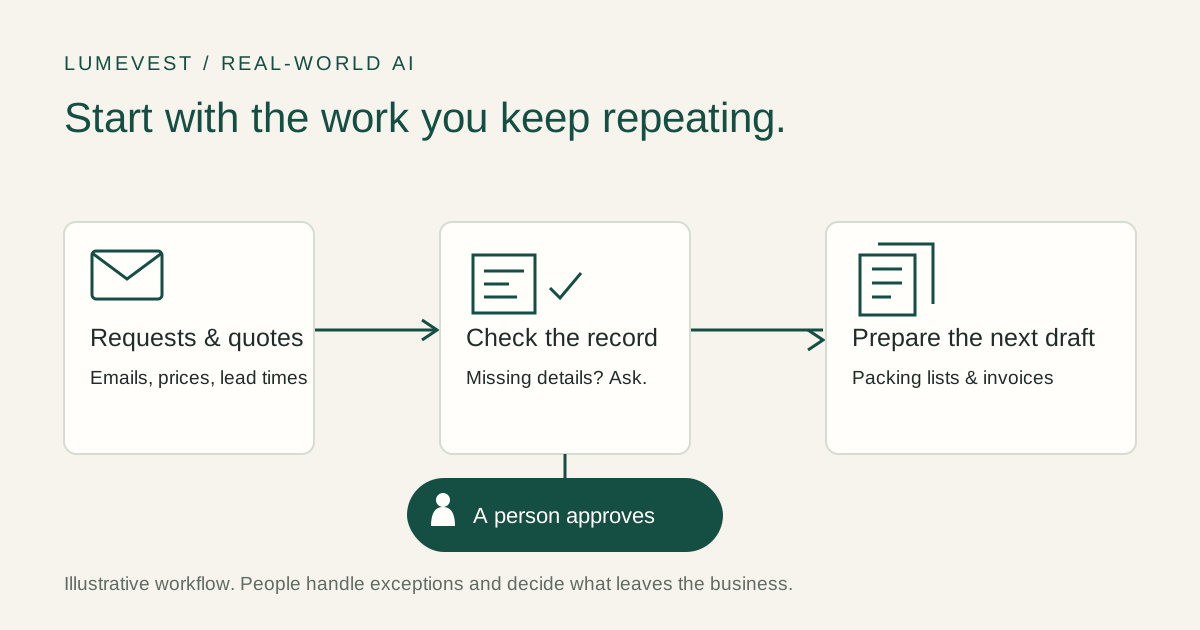
Ask your team what they copied and pasted this morning. You may hear about a supplier email, a packing list, or an invoice that needed the same order details someone had already entered. That is a useful place to start with AI.
You do not need to redesign the whole business to test an idea. Pick one repeated task, follow the information through it, and decide what a person must check before anything moves on.
Start with the RFQ email
A buyer needs prices for a list of parts. They copy descriptions and quantities into request-for-quote emails, then chase replies. One supplier quotes a different unit size. Another leaves out the delivery date. The buyer builds a comparison by hand.
A possible workflow could prepare RFQ drafts from an approved parts list and collect replies into a comparison. Keep each quoted price, currency, quantity, and lead time beside its source. If a supplier says “subject to availability,” keep that qualification visible. A blank field should stay blank and go to a person, not become a confident guess.
The buyer still checks whether the quotes are comparable and approves the choice. The lowest unit price may come with freight charges, a larger minimum order, or a lead time the business cannot accept. See the vendor RFQ and quote comparison example.
Use the checked shipment for the packing list
Once an order is ready to leave, someone often types the same part numbers and quantities again. A draft packing list could use the checked shipment record instead.
The warehouse team must confirm what actually shipped. Partial shipments, substitutions, changed addresses, and the wrong part revision need a clear stop for review. An order says what was requested; it does not prove what went into the box. The packing lists and shipping documents example shows where those checks belong.
Prepare the invoice, but keep approval with accounting
A checked shipment can also supply quantities and references for an invoice draft. Approved pricing and payment terms must come from the right records. Do not ask AI to invent a missing price, choose tax treatment, or accept new bank details from an email.
Accounting reviews the draft against the order and shipment before issuing it. Duplicate shipment messages should not create duplicate invoices. A disputed quantity or unmatched order should land with a named person. Read the invoicing from shipment records example.
Decide what happens when the information is wrong
Before a pilot, agree who checks the output and who owns each exception. Give that person the source document and a clear reason the record stopped. They should be able to correct it, reject it, or pause the workflow.
Use ordinary rules or existing integrations when they do the job. AI may help read an unevenly formatted email or prepare a draft, but it does not replace access controls, reliable records, or business approval. Check how a provider handles data before sharing customer or supplier information, and use non-sensitive samples while exploring an idea.
Count the checking time too
Watch the current task before changing it. Note the time spent entering details, waiting for missing information, and fixing mistakes. During a small pilot, count the review and correction time as well. If staff spend longer fixing drafts than doing the task themselves, change the approach or stop.
These are possible workflows, not claims of customer results or promised savings. The useful test is whether one task becomes easier to complete correctly with your records, tools, and team.
Bring one example of work your team keeps repeating. Describe what arrives, what gets copied, and who approves the result. Contact LumeVest to discuss your workflow. Please leave confidential documents out of the first conversation.